Wuthering Waves Version 3.6 Phase 1 picks up with the introduction of Qingxiao as she helps you hunt down the arc’s main villain, Muyu. On paper that’s a great setup: a region built on cultivation, a guardian with two centuries behind her, and a villain worth chasing. In practice, this chapter is a textbook kitchen nightmare — full of good ideas it never learns how to serve. I came away impressed by what it was reaching for and frustrated by how often it tripped on the way there.
If you’ve never touched the game: in Wuthering Waves you play as a mysterious newcomer known only as the “Rover.” You wake up with no memories in a world overrun by creatures called Tacet Discords, and you’ve gotta navigate war-torn landscapes, underground factions, and roaming monsters to uncover the truth about yourself.






Is the Story Any Good?
Let’s be fair first. Bangers like 3.1 Phase 1 and the Cyberpunk collab prove that Wuthering Waves can absolutely cook up some of the best stories in the genre when it puts its mind to it. It’s also fully capable of burning the kitchen down, as Version 1.0 and the glorified character story that was 2.6 Phase 2 showed. No live-service game delivers top-tier story updates every single time — even Arknights and Blue Archive have rough patches.
The problem is that 3.6 Phase 1 isn’t short on good ideas. Its take on cultivation, humanity, and the sacrifices people make for something bigger than themselves (stacked up against 3.4 Lucilla Segue’s collective concept) is genuinely compelling. Qingxiao is a fantastic character to build those ideas around, despite my usual dislike for cultivation-type characters, since most of them are pretty one-dimensional.
Having good ideas and knowing how to tell them are two very different things, though. Version 3.6 keeps tripping over itself trying to connect those ideas, just like Version 3.5 did. It constantly introduces conflicts, revelations, and character developments before giving you enough context to care, so the payoffs feel forced instead of earned. And because 3.6 isn’t introducing a new region, it can’t hide those problems behind strong worldbuilding. What’s left is a story that’s surprisingly thought-provoking, yet bafflingly contrived.
The Structure Is a Mess
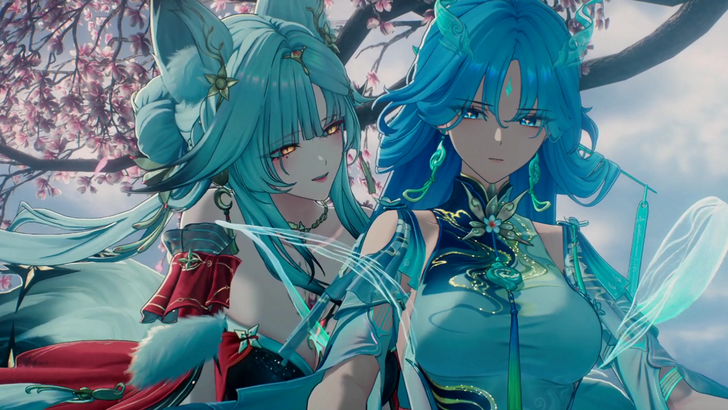
The biggest problem shows up almost right away. After seeing Suisui off as she heads back to Mengzhou — a playful but oddly flat farewell — the game suddenly cuts to a flashback introducing Qingxiao. It shows Hsin inviting her to live in Xuanfang Hold, because, like most sages in cultivation stories, she’s basically a shut-in, and it hints at why someone who supposedly pursues detachment would serve as one of Xuanfang’s Wardens.
And that’s it. That’s the entire setup for meeting Qingxiao, delivered right after you say goodbye to Suisui. It perfectly illustrates the chapter’s core flaw: it keeps answering questions the story never properly taught you to ask. Good setup isn’t just explaining things before they happen. It’s establishing a question and giving you a reason to care about the answer. 3.6 does it backwards — it drops the answer first and expects you to retroactively figure out the question.
Sometimes it assumes you still remember a setup from a month ago. Sometimes the relevant info is buried in an optional journal or a throwaway NPC line. And sometimes the setup just isn’t there. That Qingxiao flashback is the clearest case: dropped after a month-long patch gap, it feels less like an organic reveal and more like the story scrambling to fill a hole it forgot to dig during Version 3.5. It should have closed 3.5 and built anticipation, not been crammed into the opening minutes once the momentum had gone cold.
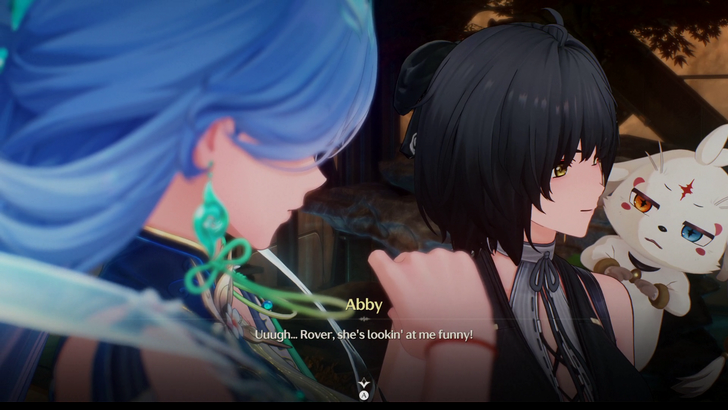
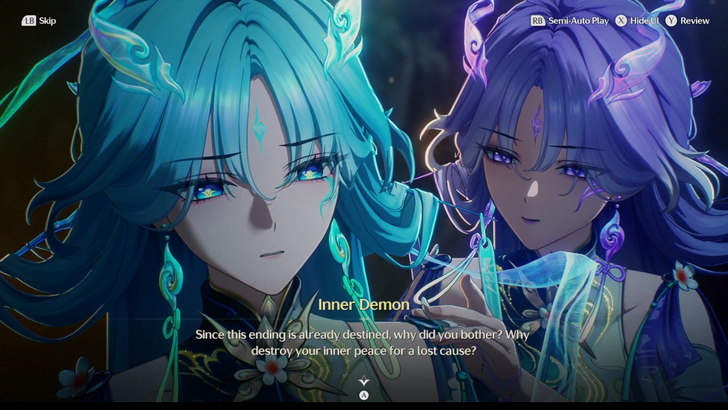
There’s also a jarring genre shift. The previous chapter was mostly a standard hero’s journey, and now 3.6 keeps introducing cultivation-themed ideas, so it reads like a different show suddenly took over. Then come the abrupt conflict devices. The worst is Qingxiao’s inner demon, who looks suspiciously like Cantarella in a Xuanfang robe, with literally zero setup besides Qingxiao suddenly telling Rover they should stab her if she turns on them. How are you supposed to react to that?
It reminds me of the CGI mana dragons Studio DEEN pulled out of thin air in Fate/Stay Night — a replacement for an established mechanism that exists mostly because the script can’t adapt the original. We’ve seen Wuthering Waves manifest inner conflicts as physical forms before, like with Carlotta, but at least hers had a proper explanation rooted in her circumstances. Qingxiao’s feels like a shortcut for externalizing a conflict the story never established.
The ideas themselves aren’t bad. I expected Mengzhou to center around cultivation the moment I saw floating cities and flying swords, and there’s real logic in manifesting Qingxiao’s internal conflict as an alternate version of herself. They’re just so poorly set up that they look slapped onto the script at the last minute.
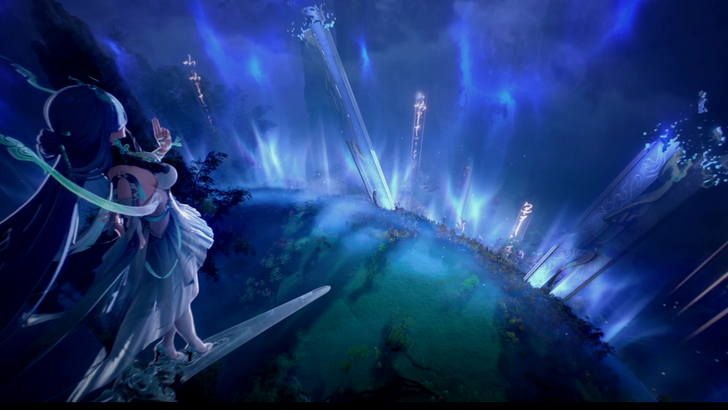
Sword Flight Has No Place Here
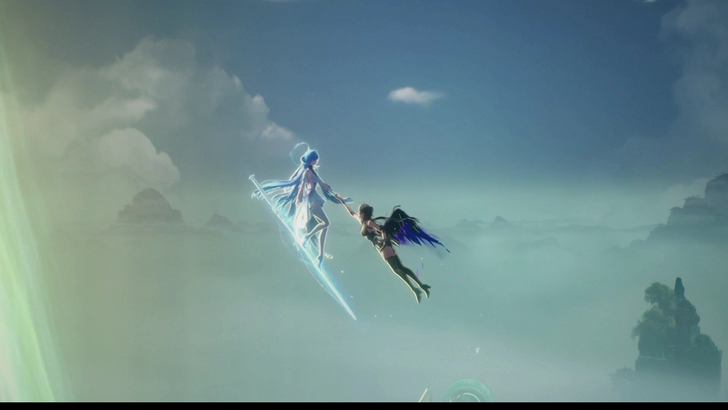
That brings us to Sword Flight, the latest attempt at reinventing the Version 1.0 glider and perhaps the clearest example of the chapter bending its own logic to make something happen. Qingxiao introduces it to Rover, who finds it fascinating despite already having Rinascita’s far more versatile Flight Module and the superior Aerial Gliding function on the Expedition Motorbike. Sure — Rover being easily impressed by flashy local tricks works fine in a fantasy setting.
Naturally, Rover ends up learning the skill herself. The issue isn’t that she learns it; it’s the absurd logical backflips the script pulls to force it. First, the game drops Rover and Qingxiao into a pocket dimension where conventional methods of flight are disabled, with the local Cloud Shuttles — powered by Xuanfang’s mechanist arts — established as the only exception. Yet when Rover tries her Expedition Motorbike’s glide, a feature that should’ve been retrofitted with the same local mechanics, it suddenly stops working, even though the vehicle runs fine outside that zone.
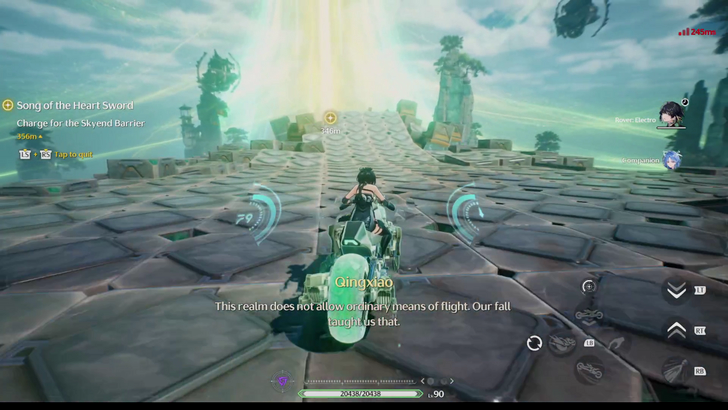
Meanwhile Qingxiao’s Sword Flight works just fine. That directly contradicts the earlier cutscene where the pair fell into this world precisely because she couldn’t maintain her flying swords. How did she know it would work? And what even counts as conventional flight, if Xuanfang mechanist arts let massive Cloud Shuttles through but block a scientifically engineered bike that’s probably half made with local parts by now?
The story jumps through flaming hoops of anti-logic just to manufacture a cutscene where Qingxiao teaches Rover the skill up close — which does look nice, if you don’t read between the lines.
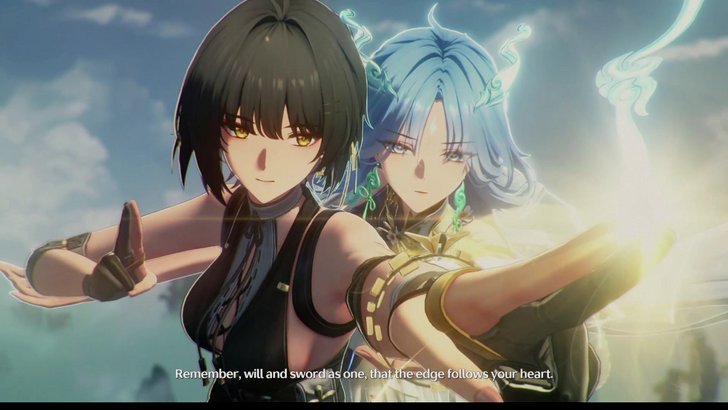 Instead of feeling romantic, it comes off awkward, because the setup makes zero sense. And to make it worse, Sword Flight isn’t even fun to travel with. It’s locked to hyper-specific interaction points that shove you along a predetermined path. Compared to Rinascita’s Flight Module or the Expedition Bike’s glide, it’s a glorified on-rails transit line without a schedule. Thankfully it seems to be a strictly localized gimmick. I hope it stays that way.
Qingxiao Is Great, the Writing Isn’t
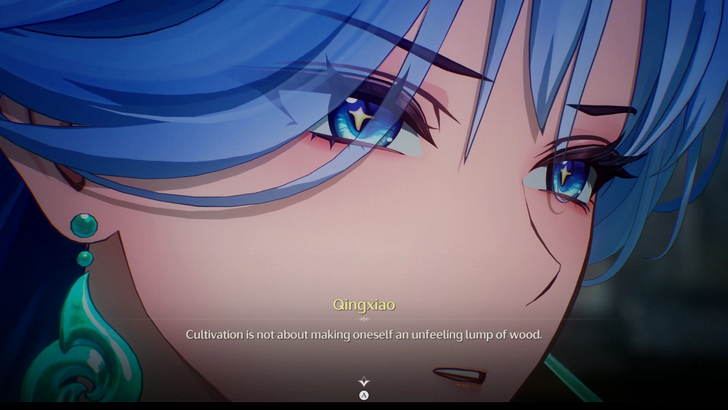
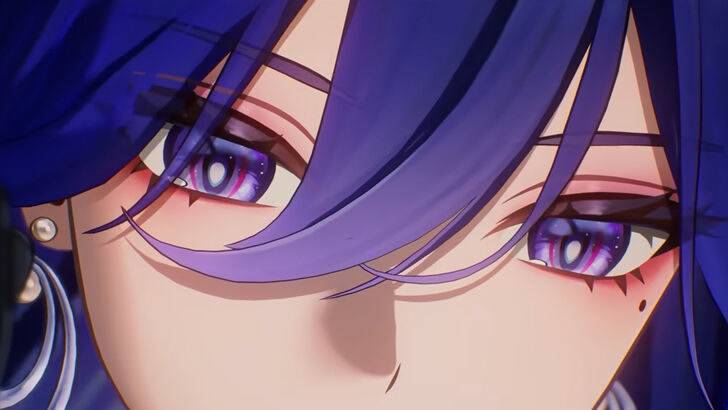
Underneath all the contrivance there’s a ton of great material, and Qingxiao — the chapter’s featured character — is probably its biggest victim. She’s one of the Xuanfang Wardens and its champion: the region’s strongest guardian, a cultivator who’s been alive for just over 200 years. Introduced as the classic secluded cultivator, she nails the archetype on first glance. Ridiculously powerful, mysterious, talks like she’s reciting poetry at a competition, and has spent centuries meditating on a mountain while avoiding contact with the world.
Unfortunately, she kinda sucks at the “avoiding contact” part.
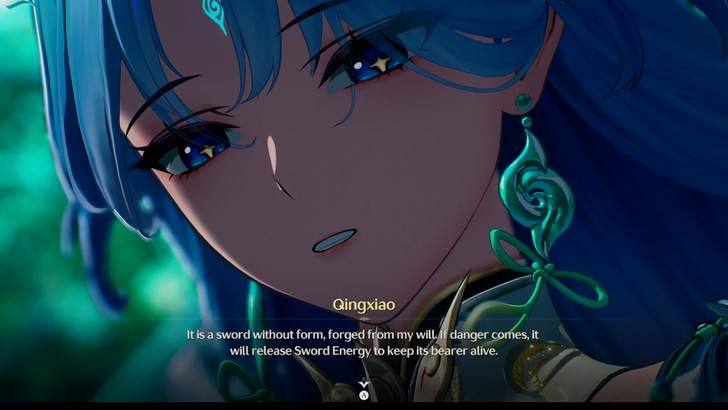
She keeps putting herself at risk to save as many people as possible, even when it burns energy she could use for more important things — like staying locked in her room. The story makes clear that those activities are exactly what a proper cultivator should avoid. That’s what makes her interesting, and not just because most cultivator characters are flat. Her inability to let go of her connections and karma is literally what makes her strong: she can harness the “SwordWill” of others — their determination and will to live, I think — and turn it into power. The stronger that will, the sharper her blades; the more people, the more swords she can manifest. Caring isn’t a flaw she refuses to drop; it’s the foundation of her strength, a direct middle finger to the trope where cultivationists max out their unemployment and introversion stats in pursuit of enlightenment.
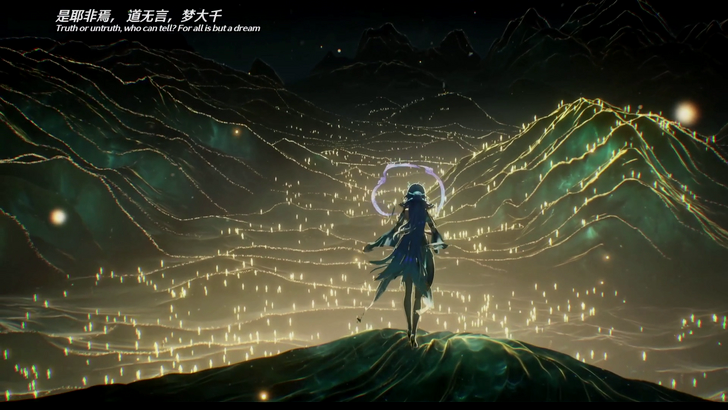
The writing just refuses to let those parts speak for themselves. Why did her inner conflict need to be a literal alternate person? Her struggle is fundamentally psychological, and turning it into a body risks cheapening the resolution.
Rover’s Gravity Works Against the Story
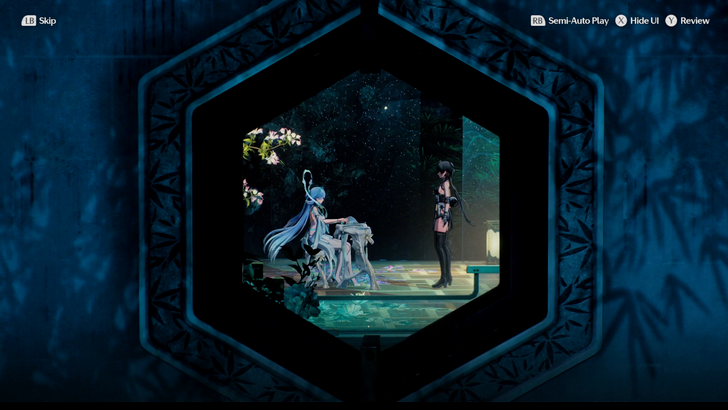
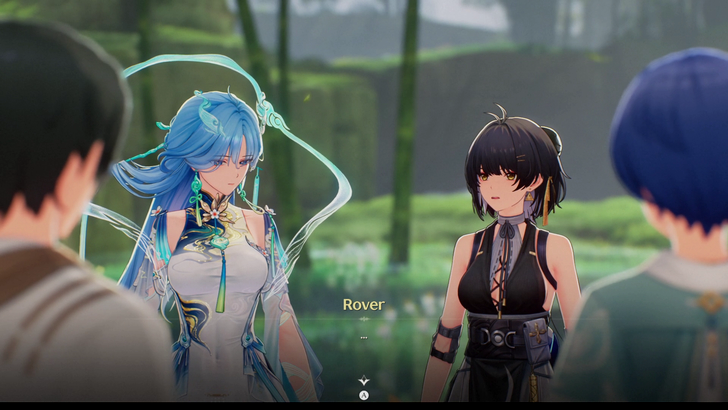
The worst part is how hard the chapter forces a connection between Qingxiao and Rover, from every angle: mentorship, comrades in arms, romance (because of course), and even a shared history as past acquaintances. It falls flat in almost every one except their growth as battle buddies, because beyond all that fighting, the story never shows enough to justify the rest. Qingxiao’s “mentorship” amounts to teaching Rover Sword Flight, yet Rover latches onto that forever because she’s “technically” the first disciple Qingxiao ever had — even though Qingxiao herself admitted Rover wasn’t the first person she taught any arts to.
There’s also a weird amount of hand-holding aimed at building romantic tension, which just reads as Qingxiao being oddly touchy, since they haven’t been through anything intense enough to push them past battle buddies.
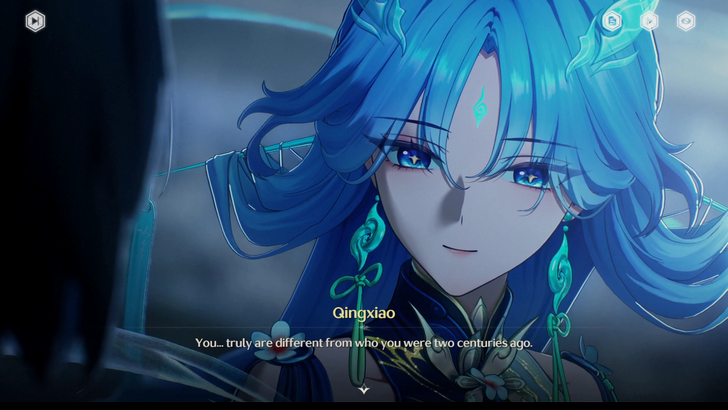
Ironically, there’s one thread that could have made all of it organic: Qingxiao knew Rover from before the memory wipe, back when she still personally commanded and wielded the power of the Sentinels. The story gimped that hard by barely exploring it. It came across as a throwaway line with no weight beyond a cool splash image.
What’s more painful is that Qingxiao already had deeply meaningful connections the story heavily promoted. If they’d built her arc around those — her friendship with the Celestial Ruoying (the best-looking NPC so far, fight me), or her service under the Sentinel Hsin — she could have grown without the burden of explaining a stack of new relationships. Ruoying’s ascension into a Celestial came directly from Qingxiao’s “failures” in letting go of worldly connections, and Hsin is the one who gave her the duty of protecting Xuanfang and its people. Those threads could have made her one of the game’s most memorable regional characters — especially for anyone who loves a guardian-of-the-people story. And the game already pulled it off in both phases of Version 2.4 and the Cyberpunk collab, proving Rover doesn’t need to be the center of every story.
The Good Stuff That Survived
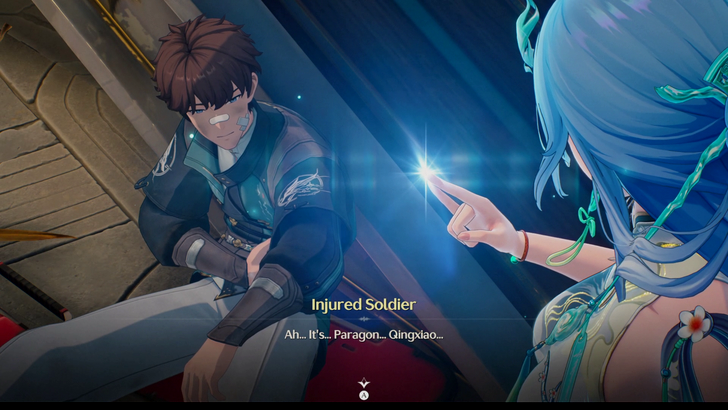
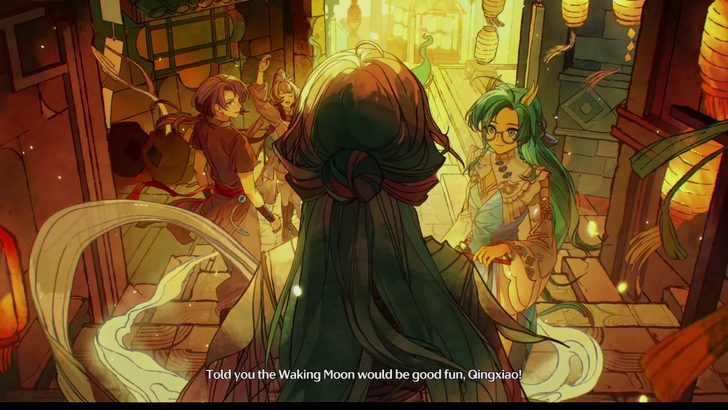
Not everything got sucked into Rover’s orbit. The story does a surprisingly solid job of making Qingxiao sympathetic: she understands the weight of her powers, the expectations piled on her, and the responsibility of her position. Her conflict isn’t whether she should care about others — it’s whether everything she sacrificed by staying connected was worth it.
The trick is that the chapter makes it look simpler than it is. You get plenty of scenes from her past showing her trying to detach, plus flashbacks of her mentor teaching her to let go of karma. Those scenes don’t show someone struggling, though. Qingxiao just accepts what she’s taught and moves on with her own path — and that’s actually a good thing. By leading you to believe her conflict is simply whether to embrace or reject attachment, the reveal that her real struggle is whether the sacrifice was worth it lands as a genuine surprise and, despite the rough delivery, feels satisfying.
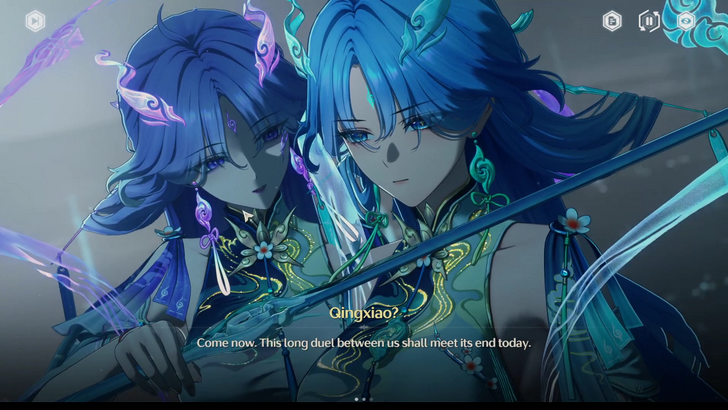
Then there’s the mirror the story barely acknowledges. Rover is around a million years old or so, basically a dinosaur, at least according to Shorekeeper — yet the memory wipe left them with a mental age somewhere between a mischievous teenager and a reasonably mature adult. Qingxiao isn’t particularly old by this game’s absurd standards, especially compared to Shorekeeper, Camellya, and possibly Hiyuki. Strip her down and she’s an ordinary girl saddled with far more expectations than she can reasonably handle. And yet she’s the one who outwardly looks detached from ordinary life.
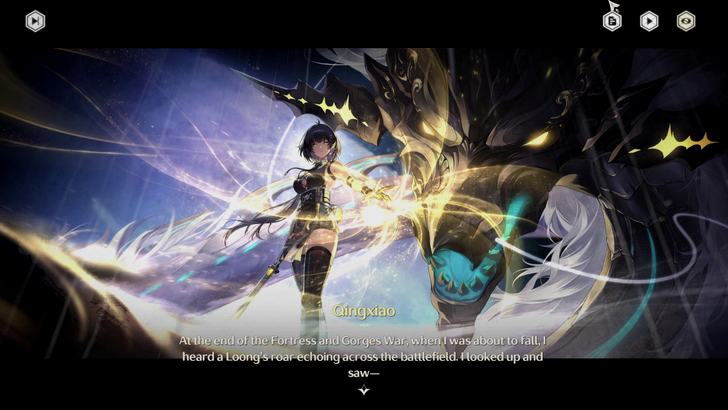
Except she made peace with that ages ago. She knows she’ll never fully rid herself of her connections to people and their problems, and instead of fighting it, she’s accepted it. Her distant demeanor isn’t rejecting humanity — it’s how someone who’s already settled her place in the world acts. Rover is almost the opposite: open to friendships and individual people, yet forced to keep a certain distance from worldly affairs that aren’t related to the Lament, as Lahai-Roi’s epilogue showed. Qingxiao looks detached but has accepted her attachment; Rover looks connected but is defined by standing apart. That’s a stupidly good thematic mirror, and it could have justified putting them together on its own. Instead the story barely admits it exists.
Everything Else Is a Mixed Bag
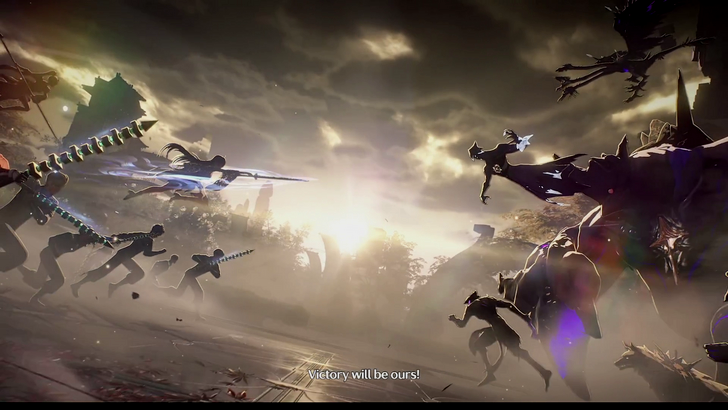
Version 3.6 keeps giving older characters more context, which is great, though there’s much less of it this time — a passing mention of Yinlin’s old extremist group, for example. Changli’s side does develop: we finally see Xuanmiao, Changli’s master, shown as a direct acquaintance of Qingxiao and one reason she became willing to be more true to herself. That hints at a deeper bond between Qingxiao and Changli, worth following when we finally visit Mengzhou.
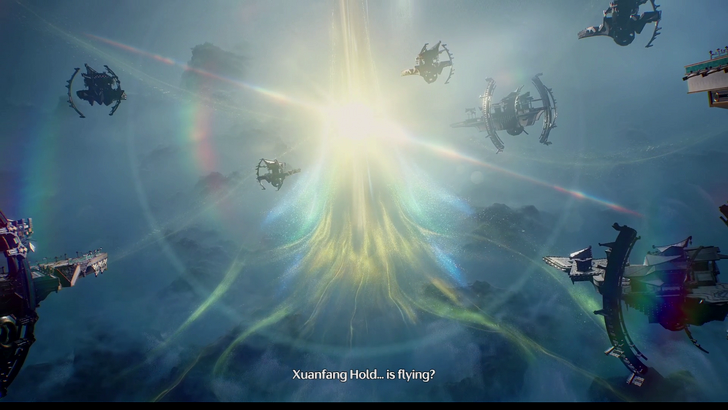
Visual presentation took a big step up too. There’s simply more to look at — Qingxiao starts manifesting building-sized swords — but the bigger win is the camera work, which uses environments to set the mood and makes locations feel imposing. The sound effects, on the other hand, are just straight up missing sometimes. I don’t know if it’s a bug, but that’s my experience. Ramming ships into each other with no explosion or crashing sound is a great way to pull you right out of the game.
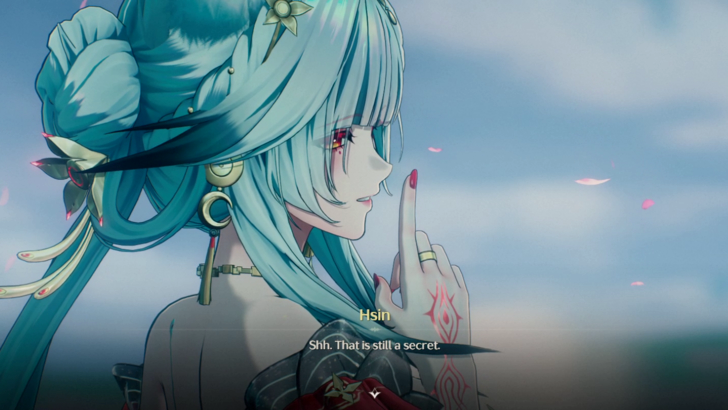
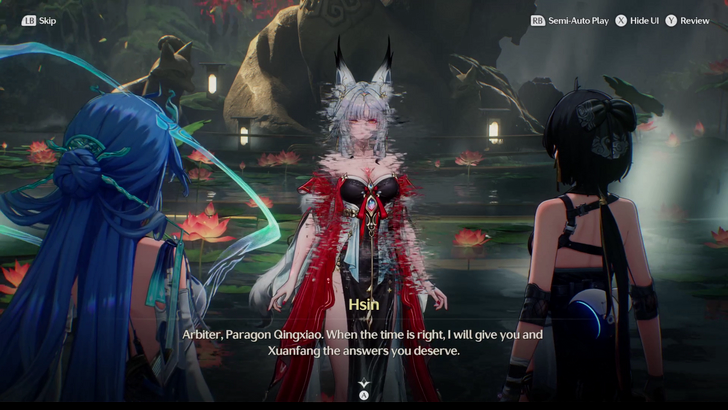
Most importantly, 3.6 seems to have forgotten it was supposed to develop the mystery around Hsin’s disappearance. There are maybe two scenes — three if you stretch it — that move it forward, and even those barely do anything. The most we get is Hsin showing up at the end, explaining why she can’t directly interfere with Muyu’s villainy, then dodging the question about where she’s been and bailing. We spent an entire patch waiting for answers, and the mystery came out untouched. Like, huh?
That’s a real problem, because the next version looks like the last before we move on. There are at most three more story chapters in Xuanfang, and they’ll have to carry Hsin’s disappearance plot entirely on their own. For reference, Lahai-Roi’s major conflicts — saving Aemeath and fending off Aleph-1 — were teased from the start and developed gradually, right up to the painfully average conclusion.
The Bottom Line
Overall, Version 3.6’s story is frustrating precisely because there’s so much worth saving in it. The ideas are genuinely interesting, Qingxiao has enormous potential, and there are moments where the writing says exactly what it wants to say. But the chapter keeps sabotaging itself with weak setup, forced developments, and an insistence on shoving Rover into relationships that would’ve been stronger without him. It’s a tragic case of a story whose ideas are way better than the execution can support.
Compared to the chapters before it, 3.6 lands in the middle-to-lower half of the pack. It’s not a complete disaster like 2.6 Phase 2 or the ever-bullied 1.0 — there’s far too much good material for that — but it’s not a successful execution of those ideas either. Here’s hoping the second half redeems the update and gets us back on track.