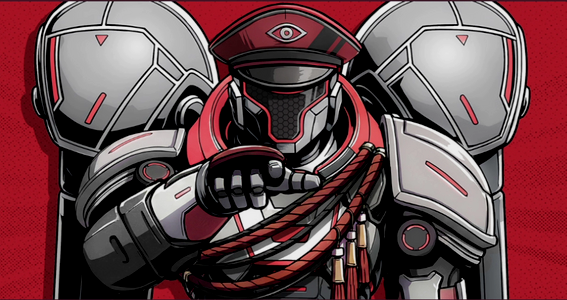
Pax Autocratica is a first person colony simulator with roguelite shooter elements. Learn more about the game’s plot, gameplay, release date, our review of the demo, and more.
Everything We Know About Pax Autocratica
Pax Autocratica Plot
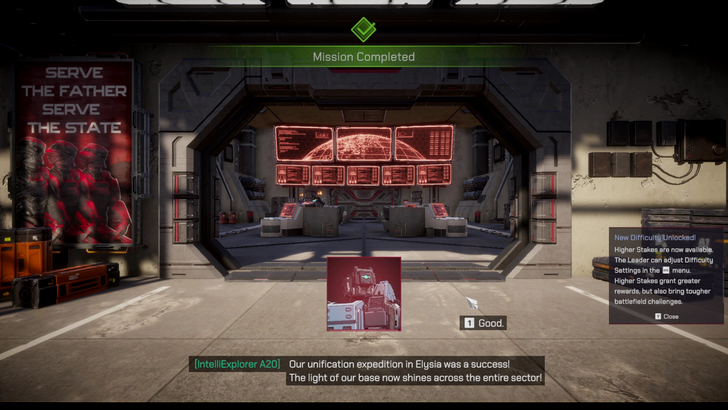
Pax Autocratica is a totalitarian colony simulator and roguelite first-person shooter developed and published by Multiverse. It’s a brutal sci-fi title where you’ve got to build the most powerful regime in the universe and conquer other colonies.
Beyond combat, political strategy and control matter for keeping your citizens in line and producing valuable resources for your colony. But hordes of enemies and sector Overlords stand their ground against your growing power, and it’s up to you to overcome every obstacle in your way.
Pax Autocratica Gameplay
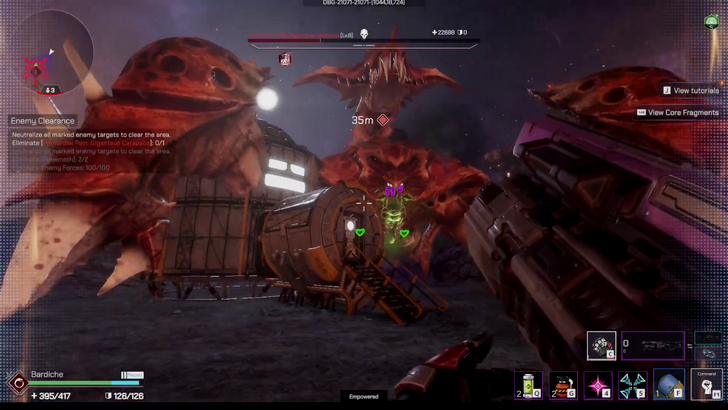
Pax Autocratica is a colony simulator where you’re running a remote outpost in service of the glorious State. Use questionable interrogation techniques to indoctrinate new conscripts, and make them fight and mine for your colony in a first person base building experience.
Pax Autocratica Release Date
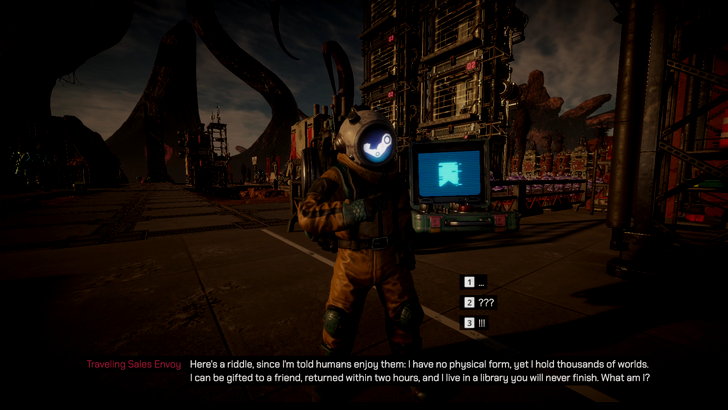
Pax Autocratica is set to release in Early Access on August 10, 2026, at 11:00 A.M. ET / 8:00 A.M. PT for PC via Steam and the Epic Games Store.
Pax Autocratica Review (Early Access)
Amazingly Cruel and Action-Packed, Yet Surprisingly Human
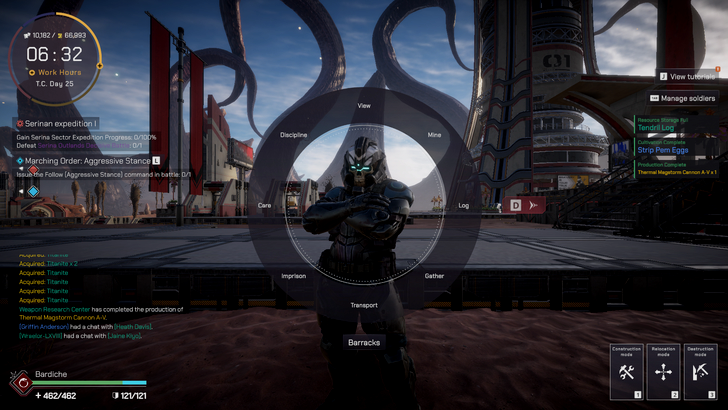
What comes to mind when you think of an autocrat? Ruthless dictators? Oppressive policies? Citizens living in fear? That’s exactly what I expected going into Pax Autocratica, and for the most part, the game delivers.
But what I didn’t expect was a protagonist that, weirdly enough, actually gave a damn. After all, isn’t the whole point of these games usually the power fantasy?
Pax Autocratica’s a first-person colony builder with shooter and roguelite elements. It’s kinda like RimWorld, except you start as the dictator of an intergalactic outpost instead of slowly working your way there.
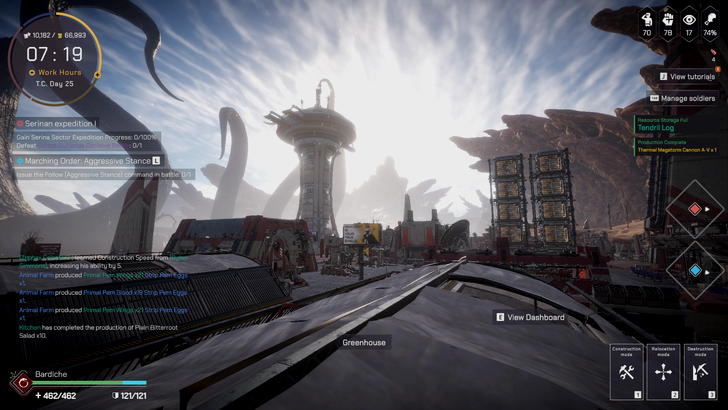
Yet despite giving off the impression of a game full of ruthless civilian exploitation and number crunching, Pax Autocratica is surprisingly… human. Whether you’re trying to expand your city, fight off hostile locals, or keep order among your diverse settlers, the game constantly pushes you to balance cruelty with compassion.
Yeah, you can be a monster. In fact, the game rewards you for it. But if you’re only a monster, your regime’s gonna fall apart.
All Is for the Glory of the State
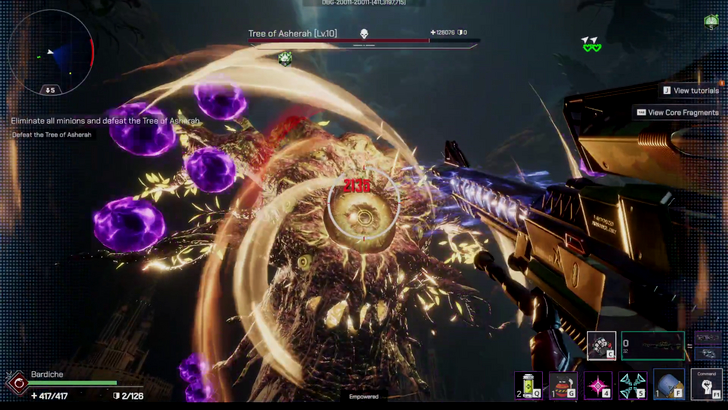
Pax Autocratica’s setting is so straightforward you could probably use it as a ruler. You play as the Leader, a high-ranking official serving the one they call the Father of the People. To prove your loyalty to the State, you’re sent to reclaim a ruined outpost in the middle of a hostile solar system from the Urslan, whose schemes have torn apart the various factions inhabiting the sector.
Basically, you’re there to kick butt for the State. Plain and simple.
It makes sense, though. The game just launched in Early Access, so it’s natural that some parts are still rough around the edges. That said, they should definitely flesh the story out more as they approach 1.0 to go along with the actually decent worldbuilding they’ve already got in there. Like, there’s already the typical sci-fi alien race (think Zerg or Tyranids) running around the sector, plus huge bosses like the Tree of Asherah, which is both a sacred site and a giant alien boss monster (maybe they’re worshipping it under duress?), and the game’s authoritarian regime itself—the ingredients for a compelling space opera are already there. The writing just hasn’t fully taken advantage of them yet.
But as of right now, the “story” developments all feel like flavor text designed to give you objectives without resorting to bullet points on your UI.
Job’s Never Finished
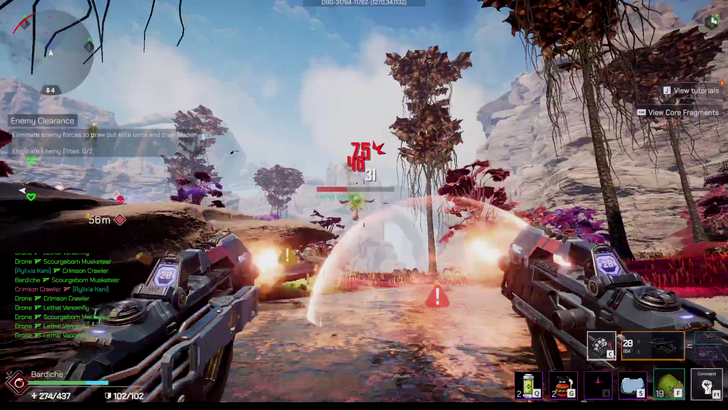
Now, for the really juicy part. Pax Autocratica is, at its core, a base builder and colony simulator. It’s a lot like Rimworld in many ways, except the direction’s already been decided for you from the start—oh, and it’s played in first person.
Fitting the theme, you get to build structures and raise soldiers to support the war effort. To do that, though, you first need to farm resources by either sending your soldiers to mine them around your base, or leading them on expeditions to “reappropriate” them from the locals.
Unfitting for the theme, though, is your ability to spend resources on things that don’t contribute to the State’s purpose. That is, you can blow precious materials on decorative structures and entertainment facilities, all to beautify and diversify the scenery and lifestyle of your people.
Now, why would you do that?
The Tyrant Who Cares
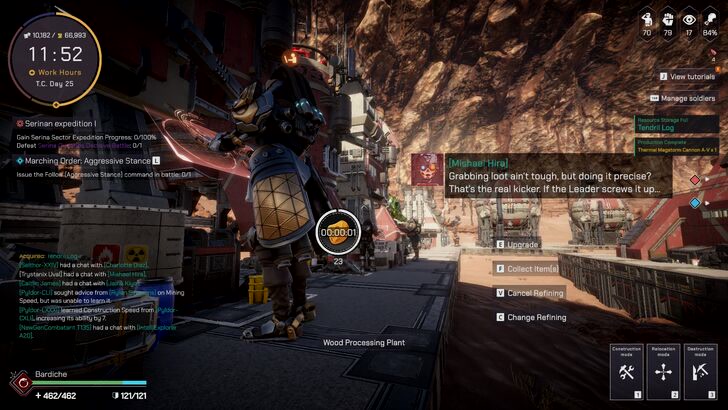
For a game about playing as a ruthless dictator, Pax Autocratica also does a surprisingly good job of encouraging the complete opposite. Every soldier-slash-citizen lives under four core metrics: Loyalty, Morale, Hunger, and Fear. But it’s the last one that defines the whole experience.
Loyalty, Morale, and Hunger work exactly how you’d expect. Keep your people fed, paid, and reasonably entertained, and they’ll stay productive. Fear, on the other hand, is a delicate balancing act. Too little of it, and you miss out on powerful bonuses that improve both governance and combat. Too much, and your citizens start having mental breakdowns that bring productivity to a screeching halt.
This system is especially engaging because of how differently the game treats raising and lowering Fear. Brutal shortcuts like electrocuting captives to force submission or sacrificing troops to promote soldiers quickly raise it, while lowering it requires slow, compassionate, practically tedious actions like personally checking in on individual citizens.
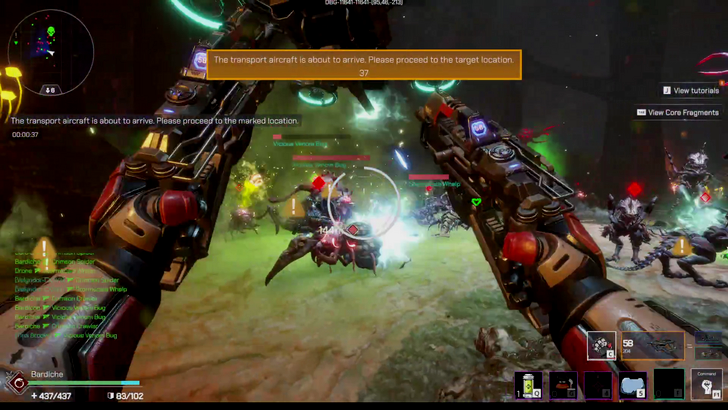
This turns Pax Autocratica into less of an absolute power fantasy and more of a balancing act between fear and stability. It constantly rewards cruelty, but never lets you forget that terror and intimidation alone are a terrible foundation for a functioning state.
While it might seem counterintuitive for a dictator fantasy, the system works because those numbers belong to actual (virtual) people. NPCs constantly chat among themselves, sharing their worries, ambitions, and everyday lives. They form friendships, cliques, romances, and families, turning every policy into something that affects more than just how many rocks you mined during a workday.
Ultimately, those four metrics don’t just determine productivity—they also shape the direction of an entire community. Fear influences whether your people willingly fight for your cause, enthusiastically work your mines, or feel secure enough to start families. The game takes what could’ve been just another management meter and turns it into something that feels socially tangible, and that contrast between how easily Fear is raised and how painstakingly it must be lowered is what makes Pax Autocratica’s world feel surprisingly alive.
You Scratch My Back, I’ll Whip Yours

By the time you reach Pax Autocratica’s second region, you’ve probably researched enough technologies and recruited enough citizens to field a proper army without crippling production back home. You’ll need it, too. Enemy encounters get way bigger, with persistent melee swarms and long-range snipers that are tough to handle alone. Without a sizeable force, most battles turn into desperately kiting enemies while shooting over your shoulder.
So, where does Fear come in? Well, remember that expeditions also run on a roguelite progression system? One of its upgrade paths directly converts your soldiers’ Fear into powerful combat bonuses, boosting both their effectiveness and your own. The buffs are so strong that an army of shaky-kneed conscripts can bulldoze through encounters that would otherwise be overwhelming.
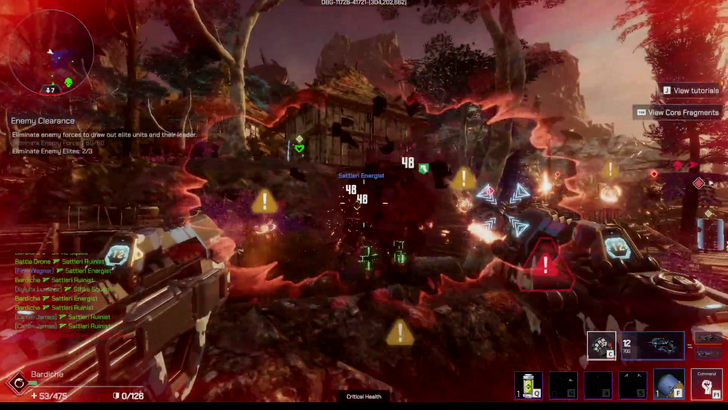
Ironically, that’s when you start babying them. Every soldier who gets knocked out is one less rifle helping you clear the map, so the stronger your squad gets, the more desperately you’ll try to keep them alive. And it’s a pretty funny contrast—back at home, you’re carefully maintaining just enough Fear to keep them obedient without pushing them into breakdowns. On the battlefield, though, those same frightened conscripts suddenly become your most valuable asset, turning every firefight into a strategy game just to keep them from dying.
I eventually found myself bringing healing grenades and shielding tacticals over offensive skills because of it.
Ultimately, though, what this really tells us about Pax Autocratica is that it’s a game of restraint—which is itself pretty ironic. Yeah, you can be a tyrant who doesn’t ask for anyone’s opinion, but you still need to know when to stop. Likewise, while you can chase efficiency all you want, you’ll also often have to sacrifice your own power to protect the very people who are the products of those policies.
Now, if only there were even more upgrade paths that use the Fear stat—or even the other metrics, for that matter. Maybe down the road during its early access journey, perhaps.
Shoot to… Confirm Gender?
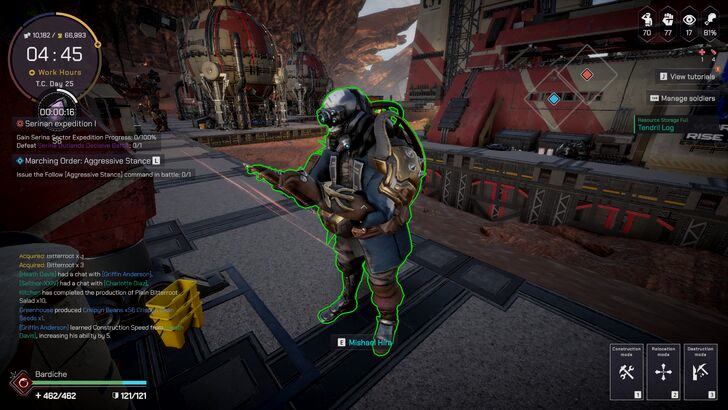
One of the funnier things I’ve noticed in Pax Autocratica is how unreliable (and that’s an understatement) external appearances can be when judging the gender of your capture targets. This matters because you’d ideally want a rough balance between male and female conscripts. And this is important because numerous traits make expanding your population through natural means unreliable, like citizens being incompatible with certain partners due to gender preferences or species differences.
This is especially true when trying to capture female enemies, because the only reliable way to identify most of them is apparently to shoot them until they make a pained grunt, then determine their gender by the tone of their voice. Truly the finest methods the State can offer in these times of war. And of course, doing this while getting peppered with bullets by their compatriots and getting mobbed by augmented soldiers in power armor ain’t exactly a walk in the park.
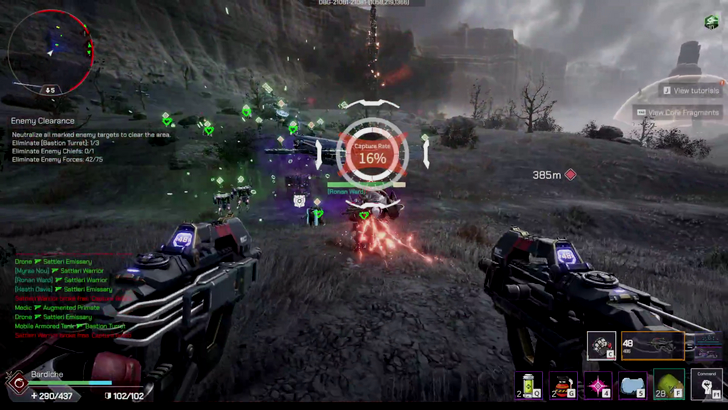
Naturally, this is much less of an issue when managing your base since you can directly select individuals through the worker management menu. That said, the visuals still make it look pretty awkward. Imagine wanting to fill out a barracks with only women to project some sense of propriety to your outpost, only to then see wide-shouldered, bulky people in power suits walk in.
And what makes this even more confusing is that every female character has a portrait showing them as a rather beautiful, lean individual, usually with some combination of cybernetic implants or alien features.
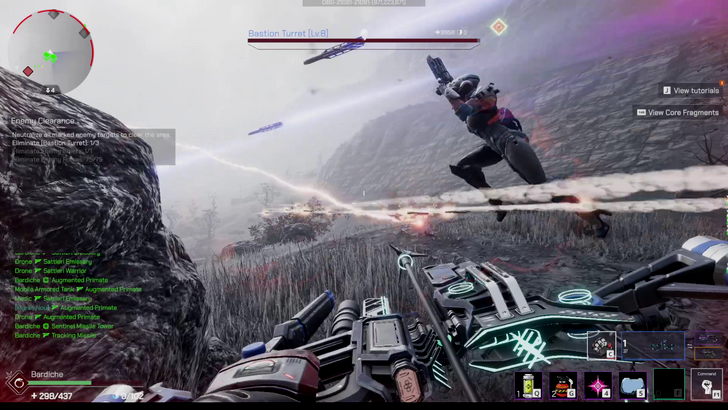
On that topic, though, I also noticed that Elites and Chiefs—which are basically just regular conscripts with more traits, fatter stats, and army slots—are only visually distinct from others because of their scaled-up size. This is, quite frankly, kinda lazy, though it does help me land headshots way easier.
This is especially true when you do manage to capture them and brainwa—I mean convince them to join your little village project. These soldiers easily tower over everyone else, making the facilities designed for regular-sized humanoids look like child seats and toy furniture to them by comparison.
Now, I’m not actually opposed to this. I do enjoy the occasional nine-foot-tall woman in a skinsuit acting as my vanguard, after all. That said, the expedition system would benefit from making these stronger characters visually distinct by design rather than just scaling up their models. After all, there’s little to gain from having higher HP if their hurtboxes are twice the size of a regular soldier, right?
Automation With Human Hands!
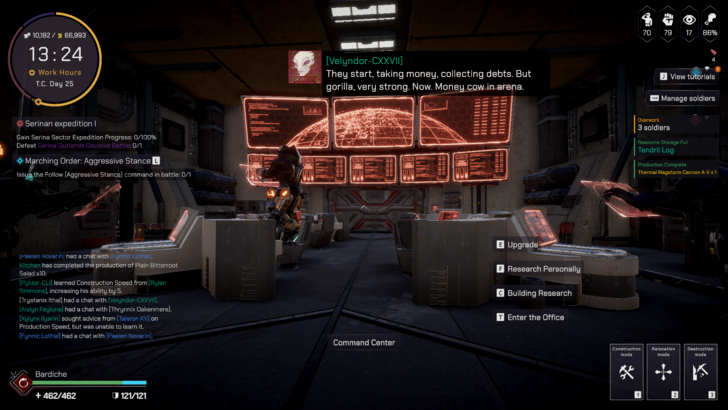
Now that you’ve got your reappropriated materials and your glorious, terrified workers (of diverse shoe sizes), what do you do with them? Build a colony, obviously. This is, after all, a colony simulator.
The basebuilding side of things is pretty standard, all things considered. You’ve got to take care of both the soldiers’ needs and feed your war efforts at the same time, which means building factories, research centers, propaganda machines, shelters, and entertainment centers in almost equal amounts. It’s the defining experience and the core gameplay loop, since Pax Autocratica is ultimately a game about living the life of an outpost dictator in hostile space. The mixed bag in all this, though, is how it handles work assignments.
Simply put, it tries to balance automatically assigning workers to empty slots with manual designations. The result, however, is wildly inconsistent in terms of effectiveness, since the system doesn’t actually try to make the best use of each conscript’s stats. For example, you might suddenly find a big-brained soldier getting handed a pickaxe, or a cooking prodigy getting tossed into a factory.
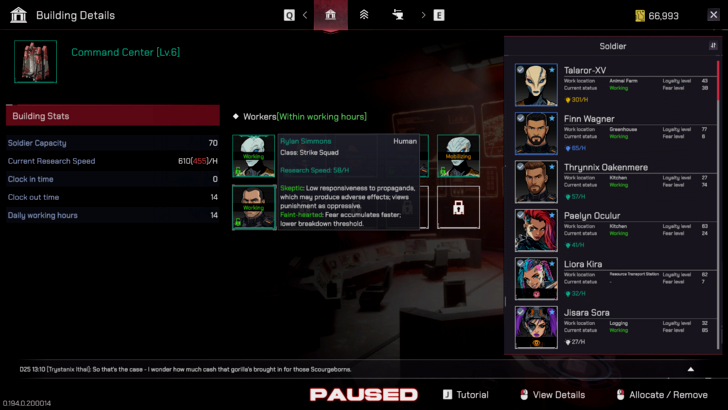
Now, I do get why. It’s the game’s attempt to avoid idle hands, since most people don’t have time to micromanage every single conscript that passes the Leader’s indoctrination—I mean interviews. So whenever there’s an empty slot at an active facility, it tries to boost production by filling it with workers. But besides severely cutting down the colony’s unemployment rate, it gets really annoying when you do find the time to organize things yourself because of a simple oversight:
There’s no way to tell which worker was assigned to which facility manually or automatically. All you can do is check every facility—which doesn’t have a dedicated menu to view all of them at once, by the way—and see if the game assigned someone totally wrong for the job. Then, you manually move them around. It’s a hassle, and really eats up a lot of time that you could be spending doing something else—
Like whipping a worker on strike because they couldn’t find the stairs to the nearest cafeteria.
Brothers, What is Your Profession?

Much later in the game, as you keep researching higher tiers of spacecraft, you’ll be able to field an increasing number of soldiers on every expedition. The roster is entirely up to you, so the game encourages experimenting with unit compositions. But while that’s nice and all, the most fun can be had when you actively try to lean hard into specific classes.
That’s something I only realized later as I captured more and more medics. See, healing in this game is pretty broken. Every medic’s healing grenade refunds a substantial amount of HP back to the affected. On top of that, they’re fairly bulky themselves and deal decent damage too. So yeah, it’s entirely possible to just field a couple dozen medics and watch them grind everything into a slow death animation.
A similar effect can be achieved by fielding mostly shielders and a few medics to support them. Because of how hard it is for them to take any damage, they can just steamroll through legions of enemies and occasionally get healed when their health somehow drops low enough.
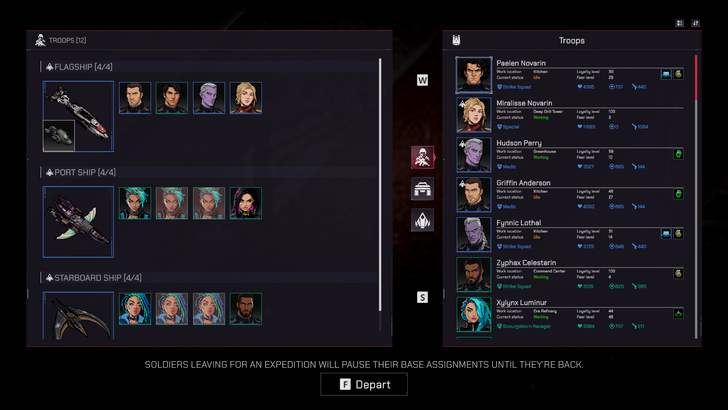
I’m not actually sure if this is working as intended, but realizing that you can basically cheese through most fights turned the experience into a hilarious strategy game where your role basically devolves into just pointing out where your near-invincible army should roll through next.
All in all, Pax Autocratica is a game anyone who enjoys FPS games and colony sims should actively keep an eye on. While it’ll only be in early access at launch, it’s already showing tons of promise, especially considering its mechanics that encourage exploiting it. There’s also a surprising amount of humanity in the immersion, despite its themes. So, go get it; the State requires your service.