
A game going viral looks like luck from the outside, because from the outside you only see the moment it happened. What you do not see is the machinery underneath: a retry loop cheap enough to run a hundred times, an artifact a player can publish without explanation, and a reason to come back tomorrow that has nothing to do with your ad budget. Virality is not a feature you add. It is a shape the game takes when several design decisions line up.
Here is what the documented cases actually show.
1. Instant Frustration: The Retry Loop
Flappy Bird is the purest example the industry has produced. Nguyen Ha Dong released it in May 2013; it took off over the following Christmas season; by February 2014 it had 50 million downloads and was earning an average of $50,000 a day in advertising, according to the figure Nguyen gave The Verge (he later told Forbes he could not confirm the exact number — only that “it’s a lot”). He spent nothing on marketing.
The game itself is a failure in three seconds: tap, hit a pipe, restart. The Verge’s contemporaneous write-up noted that players would “likely spend an hour even reaching a score of five.” That is the design, not a bug — every attempt ends with the same internal sentence: I was so close, one more.
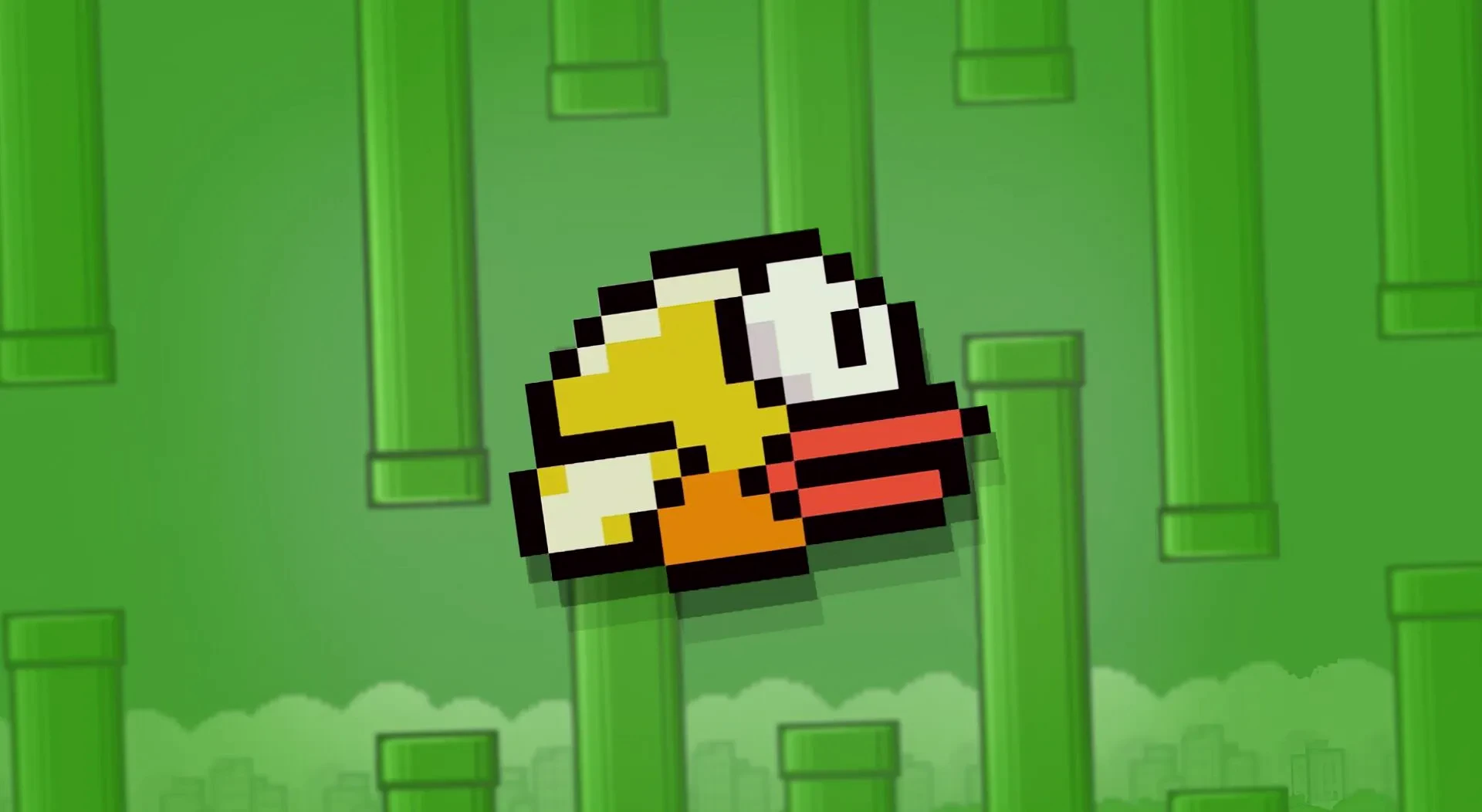
The formula: high difficulty × instant restart × zero commitment = unlimited retries at essentially no cost. On February 8, 2014 Nguyen announced he was pulling the game — “I cannot take this anymore” — and the removal itself became global news, which is a lesson about scarcity that nobody should take as a strategy.
2. Showable Skill: Achievements Worth Recording
Some games produce moments that look impressive to people who have never played them. Geometry Dash — rhythm-based, one button, brutally difficult — generates completions that players record and upload voluntarily. The run reads on video even if you do not understand the game: the music, the speed, the near-misses, the single mistake that ends it.
The design requirement is legibility. A victory that is visually unambiguous needs no caption. If a spectator cannot tell who is winning and why within two seconds, the moment will not be shared.
3. Social Currency: The Question That Requires the Game
“Can you beat this level?” spreads a game better than any trailer, because answering it requires installing it.
Wordle is the canonical case. Josh Wardle released it publicly in October 2021. On November 1, 2021 it had 90 players. By mid-December it had 300,000, and by January 2022 millions were playing daily. The New York Times acquired it on January 31, 2022 for a price described as “in the low seven figures.”
The mechanic that carried it was not the word puzzle — those existed — but the spoiler-free share artifact: five rows of colored squares that broadcast effort and result without giving away the answer. Every shared grid was simultaneously a brag, a challenge and an invitation. The Times’ own release noted that its games were played more than 500 million times in 2021; Wordle arrived as a distribution device bolted onto a subscription business.
Among Us followed the same logic from the other direction: social deduction is inherently dramatic, and the game’s structure gives every session a story — the accusation, the evidence, the betrayal — that players retell without being asked.
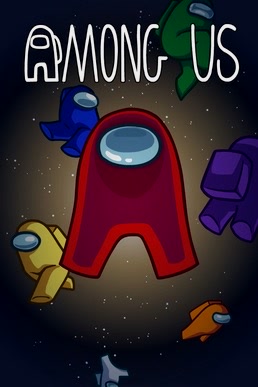
The design requirement: produce an artifact (score card, grid, screenshot, replay) that a player can post with zero context and still have it land.
4. Space for Fandom: Let Players Make the Content
Games that spread the furthest outsource part of their content budget to the audience. Geometry Dash ships a level editor, so the community generates an effectively infinite supply of playable material and the culture around it. Fan art, clips, challenge runs and meme formats all follow the same economics: every piece of user-made content is free distribution that arrives pre-trusted by the people who see it.
You cannot command this. You can only leave room for it — an editor, a replay, a shared seed, a photo mode, a score format worth posting.
5. Emotional Peaks and Daily Rituals
Memory attaches to peaks — a flawless run, an unexpected twist, a last-second save — and sharing is triggered by memory. Design the moments you want retold: the boss that changes the rules, the run where everything nearly went wrong, the near-perfect attempt.
Then add a calendar. A daily challenge gives the whole player base a shared experience with a deadline, which is exactly the condition that produces comparison, commiseration and screenshots at the same hour of the same day.
How to Apply It
- Compress the feedback loop. A new player should reach the core fantasy within ten seconds — and reach their first failure within thirty, so the retry loop starts while the game is still warm.
- Build the share artifact first. Decide what a shared post looks like before you decide what the logo looks like.
- Remove friction from the retry. No loading screen, no menu, no confirmation. Every extra tap between failure and attempt is a lost session.
- Keep something hidden. Unexplained mechanics, secret levels and odd behaviors give communities something to investigate and argue about.
- Ship a daily. One shared, expiring challenge costs little and buys a recurring reason to return.
- Give players authorship. Editors, replays and shareable seeds turn an audience into a distribution network.
The Honest Caveat
None of this guarantees virality, and anyone selling certainty is selling something else. These patterns raise the probability that attention converts and compounds: cheap retries produce volume, showable skill produces content, share artifacts produce invitations, and daily rituals produce return visits. The game still has to be good enough that the person who arrives stays for more than one run.
Flappy Bird had a famously unfair difficulty curve and spread anyway, because the loop was so tight and the artifact so perfect. Most games get one of the five. Design for all five, measure which ones fire, and let the mechanics do the shouting.
Sources
- Indie smash hit ‘Flappy Bird’ racks up $50K per day in ad revenue — The Verge, 2014
- No, Flappy Bird developer didn’t give up on $50,000 a day — CNET, 2014
- The New York Times Company acquires Wordle — NYT press release, 2022
- The New York Times Buys Wordle — The New York Times, 2022
- Geometry Dash on Steam
- Among Us on Steam